Bakuchiol Facial Treatments for Fine Lines and Lost Firmness
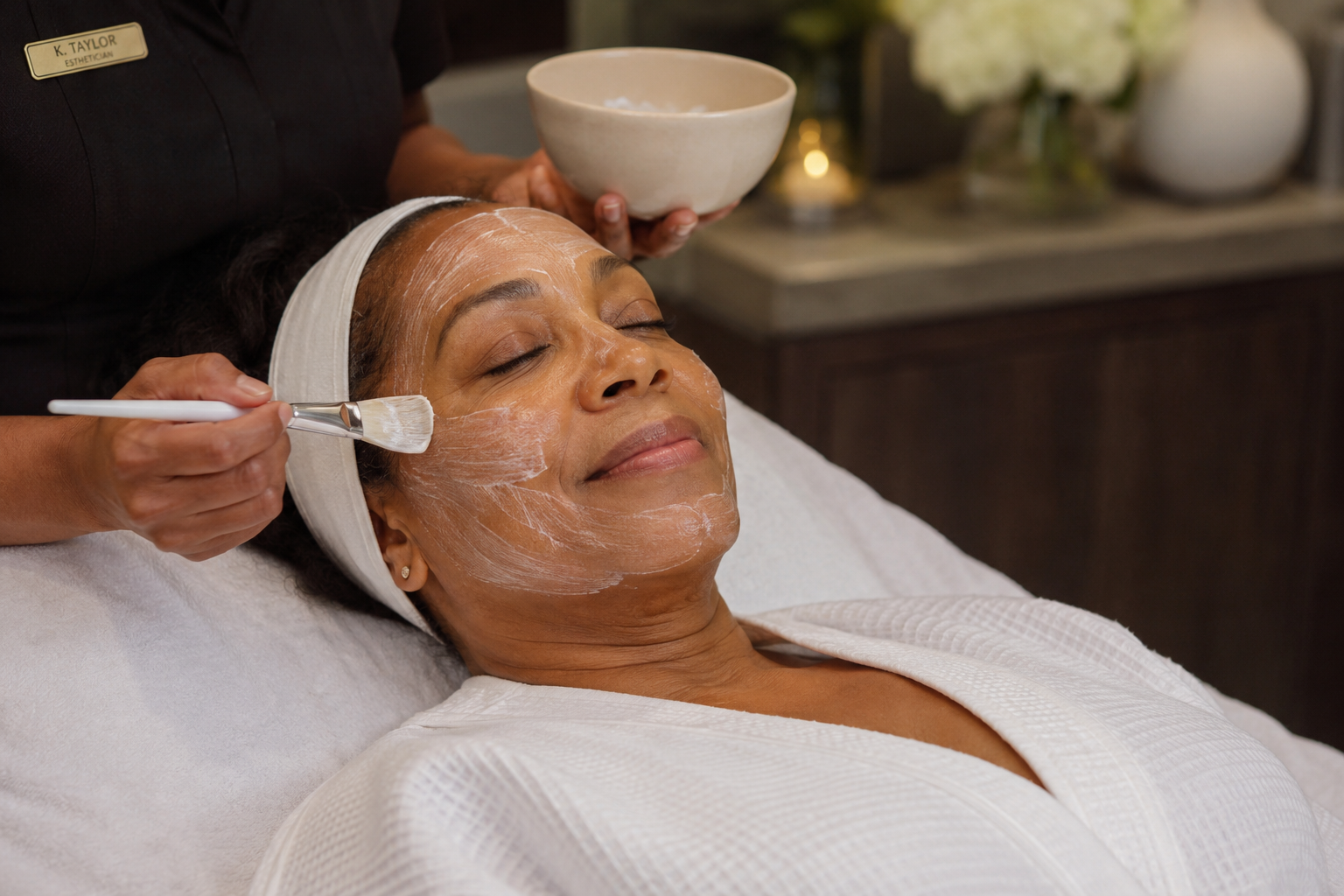
The mirror tells two different stories at once. Fine lines, traced shallow across the outer corner of the eye or fanning from the lip line, register first because they sit on the surface. Lost firmness arrives more quietly. It shifts the cheekbone’s projection, softens the angle along the jaw, settles the brow a quarter inch lower than it sat a decade ago. The two concerns share a biology, which is why they tend to surface together, and why a single ingredient can speak to both.
Bakuchiol has earned its place in that conversation through pedigree and politeness. Pedigree, because the plant compound, a meroterpene drawn from Psoralea corylifolia, behaves at the cellular level much the way retinol does. Politeness, because it tends to skip the flaking, stinging, and barrier disruption that send a lot of mature-skin users away from retinoids before any results have a chance to land. The picks that follow are organized by how thoughtfully each formula treats both halves of the problem: the surface texture and the underlying architecture.
What Causes Loss of Firmness in Mature Skin?
Loss of firmness in mature skin is caused by a slow combined decline in collagen, elastin, and glycosaminoglycan production, which together weaken the dermal scaffolding that holds the face’s contours in place. After age thirty, collagen synthesis drops by roughly one percent per year, a quiet attrition that compounds invisibly until the face begins to read differently in photographs. Elastin, the protein responsible for the skin’s recoil, recovers more sluggishly after menopause, when estrogen withdrawal pulls back support from the entire dermal matrix. Glycosaminoglycans, the molecules that hold water inside the dermis, decline alongside, and that loss of bound hydration is part of why mature skin can feel thinner even when it’s well moisturized on the surface.
Fine lines are the visible reading of the same process at the epidermal layer. Cell turnover slows, dead corneocytes linger, light catches the texture differently, and creases that used to vanish overnight start to hold their shape. A cream that smooths fine lines without addressing what’s happening below tends to read as a temporary blur rather than a real correction.
Does Bakuchiol Help with Fine Lines and Lost Firmness?
Yes, bakuchiol helps with both fine lines and lost firmness because it activates the same retinoic-acid-receptor pathways retinol does, which means it nudges the skin toward producing more type I and type III collagen, the two forms most relevant to dermal density and surface smoothness. The often-cited 2019 split-face trial published in the British Journal of Dermatology compared 0.5 percent bakuchiol applied twice daily against 0.5 percent retinol applied nightly across forty-four patients over twelve weeks. Wrinkle improvement and pigmentation correction tracked closely between the two ingredients. The bakuchiol side, notably, produced significantly less stinging and scaling, which is the practical difference that decides whether a routine survives the first month.
Two more details matter. Bakuchiol does not cause photosensitivity, so it can sit comfortably in a morning routine alongside antioxidants and sunscreen, and it pairs well with peptides, niacinamide, and most vitamin C formulations without the buffering choreography retinol sometimes demands. The honest timeline question, how long does bakuchiol take to work on fine lines, lands around eight to twelve weeks for a noticeable shift in texture, with firmness changes accumulating more gradually as collagen turnover catches up.
What follows is six bakuchiol-led treatments, ranked, beginning with the formula best calibrated for skin past forty.
1. Fièra Cosmetics Bakuchiol Rejuvenating Facial Treatment
Fièra’s formula takes the top slot because it was built specifically for the demographic that needs bakuchiol most, and the calibration shows in every choice the formula makes. The brand has spent its tenure speaking to women over forty, and the bakuchiol concentration reflects what that skin actually responds to: active enough to engage retinoic-acid-receptor pathways meaningfully, mild enough to use morning and night without provoking the cumulative irritation that derails consistency.
The texture lands somewhere between a serum and a light cream, the sort of finish that absorbs in under a minute and leaves a faint cushioned softness rather than a film. Mature skin, particularly skin that has lost some of its glycosaminoglycan-bound water, reads heavy products as occlusive and thin products as drying, and the middle path this treatment threads is part of why it integrates cleanly into existing routines.
Beyond the bakuchiol itself, the formula is paired with antioxidants and hydration vehicles chosen to support elasticity rather than simply layer over the top of it. The supporting cast keeps the barrier well-fed while the bakuchiol does its longer work on collagen synthesis below. Surface plumping shows up first, within a few weeks, as bound water returns to the upper dermis. The architectural shift, the part that softens the slight downturn at the jaw or restores a little projection across the cheekbone, follows on the longer collagen timeline.
The formulation is paraben-free and cruelty-free, a baseline rather than a marketing flourish for the brand. Packaging is simple: an opaque vessel that protects the active from light degradation and a pump that meters a precise dose. There is no theater here, just a treatment built for skin that has changed and would prefer not to be lectured about it.
2. The Peptide-Paired Bakuchiol Serum
The second pick takes a deliberately collaborative approach, pairing bakuchiol with a roster of signal peptides chosen for their work on dermal density. The peptide blend includes a Matrixyl synthe-6 analogue and a copper peptide complex, both of which speak to collagen synthesis through a different mechanism than the retinoic-acid-receptor route bakuchiol uses. The two pathways stack rather than compete, which is the appeal of the formulation philosophy.
In practice, the serum has a lighter, more fluid texture than a standalone bakuchiol cream, almost watery on first contact before it settles into a slight tackiness as the peptides bind. That tackiness disappears under a moisturizer or sunscreen within a couple of minutes, but it does mean the serum belongs early in the routine rather than late.
The bakuchiol concentration sits on the moderate end, which is sensible given the peptide load. Pushing it higher would risk diminishing returns, since the peptides are doing parallel work. The result is a serum that addresses firmness through redundancy: two different signaling routes nudging the same outcome, with neither dominating.
The fragrance is minimal, a faint clean scent that fades on application, and the pH allows it to coexist with most morning vitamin C routines without compatibility friction. For anyone whose primary concern is the can bakuchiol replace retinol for firmness question, this formulation answers it indirectly: the bakuchiol holds up the surface texture and tone work retinol would handle, while the peptides take on the structural reinforcement piece retinol-only routines often leave under-addressed.
The packaging is glass with a dropper. A drop and a half covers the full face. The serum suits skin that prefers a layering approach over a single all-in-one cream, and it rewards consistency more than enthusiasm.
3. The Rosehip-Forward Botanical Treatment
The third entry pairs bakuchiol with rosehip seed oil as its lead supporting ingredient. Rosehip carries a meaningful concentration of trans-retinoic acid precursors and essential fatty acids, which complement bakuchiol’s retinoic-acid-receptor activity through what amounts to a botanical relay: the rosehip primes the skin’s lipid matrix while the bakuchiol works on the receptor side. The two ingredients have appeared together in apothecary traditions for years, and the modern formulation reads like a refined version of that pairing.
The texture is the first thing anyone notices. The treatment pours like a thin oil with a slight viscosity, warms quickly between the fingertips, and absorbs to a soft semi-matte rather than the slick finish a pure facial oil leaves behind. The carrier blend, which leans on squalane and a fractionated coconut derivative, does most of that absorption work, allowing the rosehip and bakuchiol to settle in without sitting on top.
For the firmness piece, the rosehip contribution shows up most visibly in the way the skin holds light a few weeks in. Mature skin that has lost some dermal density tends to read flat in overhead lighting, and the lipid replenishment restores some of that bounce on the surface while the bakuchiol works its longer collagen timeline below.
The formula is fragrance-free in the conventional sense, though the rosehip itself contributes a faint earthy note that fades within a few minutes. It suits drier mature skin better than oilier types, and works best as a nighttime treatment, when the slight emollience can settle in undisturbed. The treatment answers is bakuchiol good for elasticity with a yes that’s lipid-supported rather than peptide-driven, a meaningfully different pathway to similar territory.
4. The Whipped-Cream Texture Cream
The fourth pick is built around its texture, and that’s not the trivial framing it can sound like. The cream is whipped to a soft, almost mousse-like consistency that collapses into the skin on contact and leaves a finish closer to a serum than a traditional moisturizer. For anyone whose mature skin has grown intolerant of heavy creams while still needing hydration support thinner formulas can’t deliver, the textural personality is the entire reason to consider it.
The bakuchiol sits at a moderate concentration, supported by a hyaluronic acid blend with three different molecular weights to address surface, mid-layer, and deeper dermal hydration in a single application. The multi-weight approach is increasingly common, but the formulation executes it without the tacky finish some hyaluronic-heavy products leave behind. The whipped delivery system is part of why it works: the air incorporated into the cream allows it to spread thinner per gram than a denser formulation, which means the actives reach the skin without the carrier pooling on top.
A small percentage of niacinamide rounds out the formula, contributing tone evenness and barrier reinforcement that complement the bakuchiol’s collagen work. The combination addresses the question, does bakuchiol stimulate collagen, by stacking a second supportive mechanism alongside the primary one. The niacinamide also helps with the post-menopausal redness that some users develop, which can otherwise muddy the read on whether a firmness treatment is working.
The cream sits in a wide-mouth jar, with a small spatula included to mitigate the contamination concern. As a standalone moisturizer, it works for most skin types, and pairs cleanly with a separate bakuchiol serum for anyone who wants to layer the active. The texture remains the headline.
5. The Clean-Formulation Treatment
The fifth pick approaches bakuchiol from a clean-formulation philosophy, which here means a deliberately edited ingredient list and certifications that match. The brand has built around minimum-additive formulations for several years: no synthetic fragrance, no silicones, no PEGs, with sourcing transparency on both the bakuchiol and the supporting botanicals.
What this approach gains is reactive-skin compatibility. Mature skin that has grown sensitized over time, whether through hormonal shifts, accumulated retinoid exposure, or simply a slower barrier repair rate, tends to do better on shorter ingredient lists, and the absence of common irritants here matters more than the marketing might suggest. The formula reads as comfortable from the first application, with no warming or tingling phase that some users misread as efficacy.
The bakuchiol concentration is moderate, balanced against a base of jojoba and meadowfoam seed oils that mirror the skin’s own lipid profile closely enough to absorb without residue. Rather than reaching for novel emollients with regulatory question marks, the formulation leans on lipids the skin recognizes. The texture lands as a light oil that disappears quickly, leaving a soft finish that takes makeup well.
For firmness work specifically, the clean approach is patient. The formula is not stacked with peptides or acids, so the bakuchiol does most of the heavy lifting on its own, which means the timeline runs longer than it would with a multi-active product. The trade is fewer compatibility questions and a routine that integrates without drama. It answers the what’s the best ingredient for sagging skin after 50 question with a single ingredient executed cleanly rather than a stack of promises.
6. The Recognizable-Brand Bakuchiol Cream
The sixth pick comes from a heritage brand whose approach to skincare runs through decades of clinical formulation work. The formula is engineered rather than composed, with a delivery system that encapsulates the bakuchiol in a lipid sphere designed to release the active gradually over the hours after application. The encapsulation extends the receptor engagement window, which translates to a steadier, lower-grade signal to the skin rather than the front-loaded burst a free-form bakuchiol delivers.
The texture is a traditional cream, dense without being heavy, with the kind of cushioned glide that signals serious formulation craft. A small amount covers the face and neck, and the cream finishes to a soft semi-matte that takes well to layered routines. The supporting ingredients include a tripeptide complex, a stabilized vitamin C derivative, and a botanical extract blend that rounds out the antioxidant load.
The brand’s clinical positioning shows up in the testing data published alongside the launch. Eight-week and twelve-week studies tracked wrinkle depth and elasticity measurements, and the results align with what the bakuchiol literature predicts: gradual surface smoothing, gradual elasticity improvement, and consistency curves that reward steady use over six months rather than a flashy four-week result.
The cream sits in heavier glass packaging, which the brand has used across its mature-skin lines for years, and the format signals the price point honestly. The dosing is precise, a small pump delivering a consistent amount each time, which matters for a formula where actives are calibrated against a specific delivery curve. It rewards routine over enthusiasm, layers cleanly under sunscreen, and the encapsulation system means the bakuchiol stays stable across the life of the jar.
Where the Top Pick Lands on Both Concerns
Lost firmness can register harder than fine lines for a lot of women, because it’s the part that changes the architecture of the face, not just the surface. The cheekbone reads differently in the same light. The jaw softens in the mirror at the same angle that used to look sharp. Any honest treatment conversation has to acknowledge that shift without dramatizing it.
Fièra’s Bakuchiol Rejuvenating Facial Treatment earns the top slot because it speaks to both halves of the concern with the same gesture. The bakuchiol concentration engages the retinoic-acid-receptor pathway meaningfully enough to drive type I and type III collagen synthesis over time, which is the architectural piece. The supporting antioxidants and hydration vehicles handle the surface read, restoring the bound water and lipid balance that mature skin loses alongside its collagen. The texture absorbs cleanly, the formula tolerates morning and night use, and the calibration is built specifically for skin past forty rather than retrofitted from a younger demographic.
The five other picks each have honest strengths, and the right choice often depends on whether a particular routine wants peptide reinforcement, lipid replenishment, a specific texture, a clean ingredient list, or a heritage delivery system. The top pick remains the one most precisely tuned to the dual concern itself.
The post Bakuchiol Facial Treatments for Fine Lines and Lost Firmness appeared first on Talking With Tami.
from Talking With Tami https://ift.tt/0OUd9Jj
via talkingwithtami


Comments
Post a Comment